How to Choose the Right Off Grid Solar Systems for Your Home?
As the demand for renewable energy rises, off grid solar systems have become an appealing solution for homeowners. According to the U.S. Department of Energy, the solar energy market has expanded significantly, growing by over 33% in recent years. This surge highlights the increasing interest in sustainable energy sources. Choosing the right off grid solar system requires careful consideration of various factors.
Homeowners need to assess their energy needs. Energy consumption patterns heavily influence the size and capability of the solar system. Studies show that a well-designed off grid system can reduce reliance on fossil fuels. However, selecting the wrong system can lead to underperformance, wasting both time and financial resources. Understanding the intricacies of solar technology ensures better decision-making.
Moreover, not all solar products offer equal reliability. Some brands may lack proper certifications or durable materials. Researching manufacturers and product reviews will lead to more informed choices. The journey towards a fully functional off grid solar solution is not without challenges, but the rewards of energy independence and reduced utility bills are worth the effort.
Evaluating Your Energy Needs for Off-Grid Solar Systems
Evaluating your energy needs is crucial before choosing off-grid solar systems. Begin by assessing your daily electricity consumption. List all your appliances, their wattage, and how long you use them each day. This detailed inventory helps you estimate your total energy usage. It's easy to overlook high-consumption devices, so be thorough.
Consider seasonal changes in energy needs. For example, heating or cooling systems may require more energy during specific months. A frozen winter night can demand more from your system than a mild summer day. Understanding these variations is vital. Moreover, think about potential expansion. If you plan to add more appliances in the future, your solar system should accommodate this growth.
Think about battery storage as well. Batteries allow energy use even when the sun isn’t shining. The capacity needed often depends on nighttime usage and cloudy days. Calculate how many days of autonomy you want. This decision can significantly impact your overall design and budget. Recognize that achieving a perfect balance between energy production and consumption is challenging. Regularly reevaluate your energy needs to ensure your system remains effective and efficient.
Energy Needs Evaluation for Off-Grid Solar Systems
Understanding the Components of Off-Grid Solar Systems
Understanding the components of off-grid solar systems is crucial for homeowners. These systems typically include solar panels, batteries, and inverters. Solar panels capture sunlight and convert it into electricity. They are the heart of any solar system. Batteries store this energy for use when the sun isn’t shining. Inverters convert the stored energy into usable electricity for your home.
Choosing the right components can be daunting. It's important to assess your energy needs first. How much power do you consume daily? This will guide your choice of system size and battery capacity. Consider your local climate as well. Areas with less sunlight may require additional panels or larger batteries to meet energy demands.
Tip: Always consult with a solar energy professional to avoid costly mistakes. They can help you design a system that fits your lifestyle.
Battery selection requires careful thought too. Lithium-ion batteries are popular but can be expensive. Lead-acid batteries are a more budget-friendly option but may need replacing sooner. Reflect on how long you plan to live in your current home. A longer-term investment might justify higher initial costs for better efficiency.
Comparing Different Types of Solar Panels and Batteries
When exploring off-grid solar systems, the choice of solar panels and batteries is crucial. There are various types of solar panels, including monocrystalline and polycrystalline. Monocrystalline panels are known for their efficiency and space-saving capabilities. They perform better in low-light conditions. Polycrystalline panels, on the other hand, tend to be less expensive. However, they occupy more space and are slightly less efficient.
Battery selection is equally important for storing solar energy. Lithium-ion batteries are popular for their high energy density and long life. They offer faster charging times and are more lightweight. Lead-acid batteries, while cheaper, have a shorter lifespan and require more frequent maintenance. Each type comes with its pros and cons, and the best choice often depends on your specific needs and constraints.
Tips: Research local climate conditions. They affect solar panel performance. Consider future energy needs as your household grows. Don't forget to assess the installation space available. Proper installation can impact efficiency significantly. Be prepared for potential moisture issues with batteries. This can lead to faster degradation and affect overall performance. Always read reviews and seek expert advice. Quality installation can solve many initial challenges.
Assessing Installation and Maintenance Requirements
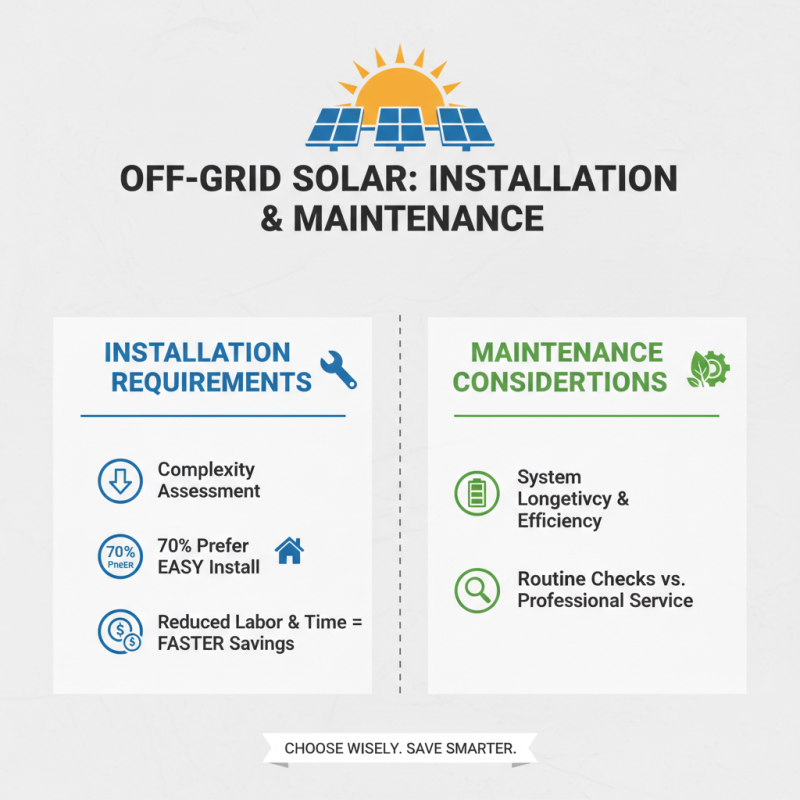
When choosing off-grid solar systems, assessing installation and maintenance requirements is crucial. Understanding installation complexity helps you make informed decisions. Professional reports indicate that nearly 70% of homeowners prefer systems that offer easy installation. A system requiring less installation time can reduce labor costs and expedite benefits like energy savings.
Maintenance is another key aspect. According to industry data, regular cleaning and check-ups are essential for optimal performance. Solar panels can lose 20% efficiency due to dirt and debris. Thus, incorporating a cleaning solution is vital. Many homeowners underestimate the long-term need for maintenance. Every year, scheduling a professional inspection can prevent issues before they arise.
Finally, the compatibility of your chosen system with local regulations can impact installation. Researching permits or zoning laws ensures compliance. This knowledge can save you from potential fines or complex removal processes. Balancing these considerations will enhance your off-grid living experience. Making informed choices today can lead to sustainable energy solutions for your home.
Budgeting for Your Off-Grid Solar System: Costs and Incentives
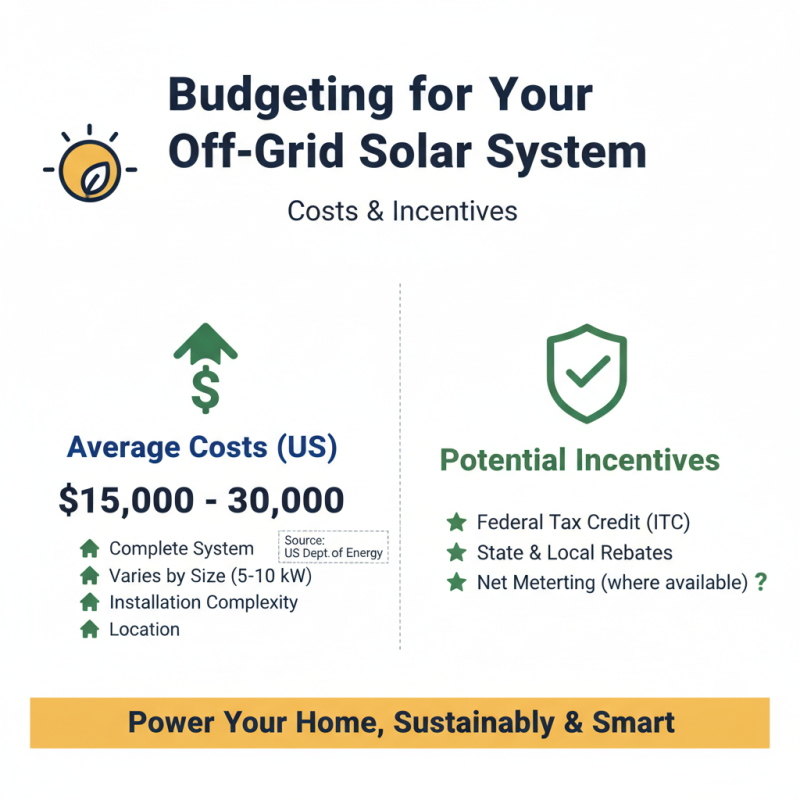
When budgeting for an off-grid solar system, it's essential to understand the costs involved and available incentives. According to the U.S. Department of Energy, the average cost of a complete solar system ranges from $15,000 to $30,000. This price varies based on system size, installation complexity, and geographic location. Many homeowners opt for systems between 5 kW and 10 kW, often suitable for typical household energy needs.
In addition to upfront costs, consider ongoing expenses. Battery maintenance and replacement can add to your budget. As noted by the National Renewable Energy Laboratory, lithium-ion batteries may last 10-15 years but come with a higher initial cost. Think about your long-term energy requirements and cost-effectiveness before making a commitment.
**Tips:** Investigate local and federal incentives, which could significantly reduce your initial expenses. Some states offer tax credits that can offset up to 26% of install costs. Always calculate your potential savings against these incentives. This approach creates a clearer picture of long-term financial viability. Don't rush your decision. Ask for estimates and reviews from multiple contractors to ensure a fair price. The more informed you are, the better your choices will be.