How to Choose Hybrid Solar Systems for Global Buyers?
Choosing hybrid solar systems for global markets requires more than comparing panel efficiency or battery capacity. Buyers must examine sunlight patterns, grid reliability, tariffs, installation skills, and after-sales support. A coastal hospital in Kenya needs different equipment from a mountain home in Chile. Temperature, dust, humidity, and shipping conditions also affect lifetime performance.
Market evidence shows why this decision matters. The International Energy Agency reported that solar PV represented about 75% of global renewable capacity additions in 2023. IRENA’s Renewable Capacity Statistics 2024 recorded 473 gigawatts of new renewable capacity that year. Yet growth does not guarantee a suitable system. A low-cost inverter may fail where voltage fluctuates daily. A large battery may underperform in extreme heat.
Paul Denholm, a senior researcher at the U.S. National Renewable Energy Laboratory, explains the core principle: “Hybrid power plants can provide more flexibility and reliability than standalone technologies.” That idea guides this article. The best hybrid solar systems combine solar generation, battery storage, grid power, and sometimes a backup generator without creating unnecessary complexity. Buyers should verify round-trip efficiency, battery chemistry, protection standards, remote monitoring, warranty coverage, and local service capacity. Independent testing and documented field experience matter more than impressive brochures. Frankly, no selection method is perfect. Weather forecasts fail. Supply chains change. Installers make mistakes. A practical buyer therefore compares technical performance with real operating conditions, regulatory requirements, and long-term maintenance evidence before signing a contract.
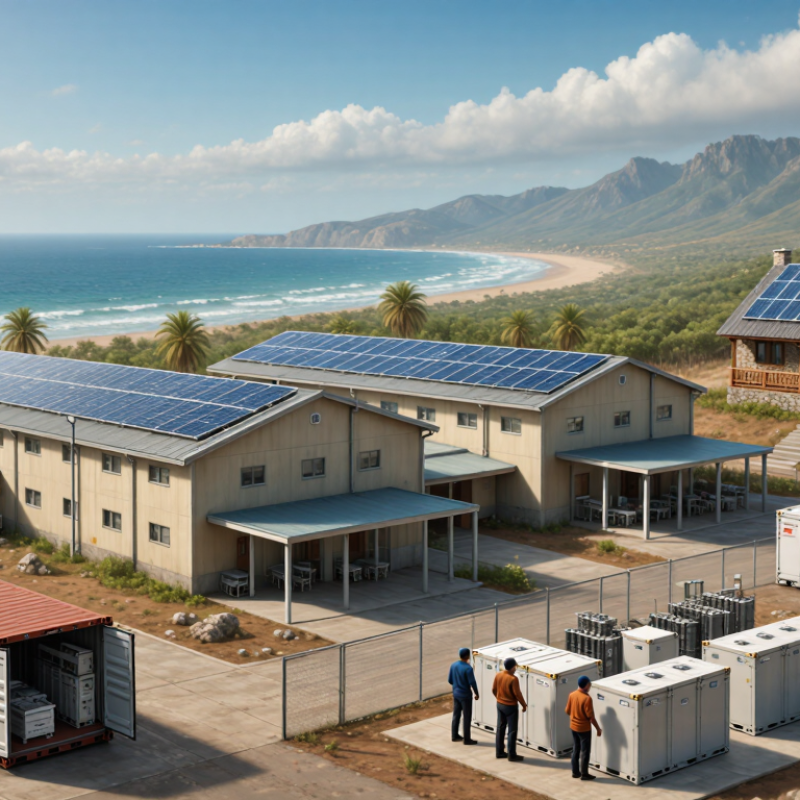
Understand the Components and Operating Modes of Hybrid Solar Systems
How to Choose Hybrid Solar Systems for Global Buyers?
A hybrid solar system combines photovoltaic modules, a hybrid inverter, batteries, protection devices, and an energy management system. The inverter controls solar conversion, battery charging, grid exchange, and backup supply. A transfer switch separates critical loads during a grid outage. Some systems also support generators, but compatibility must be confirmed carefully.
The International Energy Agency reported nearly 510 GW of renewable capacity additions in 2023. Solar power represented about three-quarters of this growth. This expansion increases demand for flexible storage and reliable control. A practical lesson from site assessments is simple: component quality alone does not guarantee system performance. Battery voltage, inverter output, local grid frequency, and communication protocols must match. Climate also matters. High heat can reduce battery life and inverter efficiency.
Tips: Check the usable battery capacity, not only the advertised capacity. Ask for round-trip efficiency, peak backup power, protection ratings, and operating temperature ranges. Request test certificates that match the target market. Do not ignore after-sales diagnostics.
Hybrid systems usually operate in several modes. In self-consumption mode, solar power serves household or commercial loads first. Surplus energy charges the battery. In backup mode, stored energy supports selected circuits during outages. Time-of-use mode charges batteries during cheaper hours and discharges them during expensive periods. Export mode sends approved surplus power to the grid. Off-grid operation requires larger storage and stricter load planning. The IEA’s Batteries and Secure Energy Transitions report highlights the growing importance of storage flexibility through 2030. Yet forecasts are not site designs. Load measurements, seasonal sunlight, and outage history should guide final sizing.
How to Choose Hybrid Solar Systems for Global Buyers? - Understand the Components and Operating Modes of Hybrid Solar Systems
| Evaluation Dimension | Typical Options or Data | System Function | Selection Guidance for Global Buyers |
|---|---|---|---|
| Solar PV Array | Monocrystalline modules; common module ratings are approximately 400–600 W per panel | Converts sunlight into direct-current electricity | Size the array according to annual solar irradiation, roof or land area, shading, local temperature, and the required daily energy yield. |
| Hybrid Inverter | Single-phase or three-phase; DC-coupled or AC-coupled architecture; typical residential efficiencies are often above 90% | Manages PV generation, battery charging and discharging, grid power, and AC loads | Confirm continuous output power, surge capability, MPPT voltage range, grid compatibility, and local certification requirements. |
| Battery Chemistry | Lithium iron phosphate (LFP) is widely used; lead-acid remains available for lower initial-cost applications | Stores surplus solar energy for later use or backup | LFP generally offers high cycle life, stable thermal performance, and usable depth of discharge commonly around 80–90%, subject to the manufacturer’s specification. |
| Battery Capacity | Expressed in kWh; usable capacity equals nominal capacity multiplied by the permitted depth of discharge | Determines how long selected loads can operate without solar or grid supply | Estimate capacity from essential-load energy consumption, desired backup duration, battery efficiency, temperature, and reserve requirements. |
| Battery Power Rating | Expressed in kW; different from battery energy capacity in kWh | Defines the maximum charge and discharge power available at a given time | Check whether the battery can support motor starting currents, pumps, refrigeration, heating equipment, and other high-power loads. |
| Operating Mode: Self-Consumption | Solar power serves current loads first; surplus power charges the battery | Reduces electricity purchased from the grid | Suitable where daytime solar production and retail electricity prices make onsite consumption financially attractive. |
| Operating Mode: Time-of-Use Shifting | The battery charges during low-price periods and discharges during high-price periods | Transfers energy use away from expensive tariff periods | Verify that local tariffs, smart-meter rules, and inverter software support scheduled charging and discharging. |
| Operating Mode: Backup | Battery and solar supply a protected-load output during grid interruptions | Maintains power for selected essential circuits | Define essential loads in advance and check transfer time, backup output rating, generator compatibility, and neutral-ground requirements. |
| Operating Mode: Off-Grid | PV, battery storage, and optional generator operate without a utility connection | Provides autonomous electricity where grid service is unavailable or unreliable | Design for seasonal solar variation, multiple low-sun days, load growth, generator integration, and battery reserve limits. |
| Grid Voltage and Frequency | Common systems include 120/240 V at 60 Hz, 230 V at 50 Hz, and three-phase configurations | Determines electrical compatibility with the local grid and loads | Select equipment certified for the destination country’s voltage, frequency, protection rules, and interconnection standards. |
| System Power Class | Small residential: approximately 3–10 kW; larger residential or small commercial: approximately 10–30 kW | Determines the maximum simultaneous load the system can supply | Base the rating on peak demand, starting currents, load diversity, future expansion, and whether the system is single-phase or three-phase. |
| Protection and Safety | DC and AC isolators, overcurrent protection, surge protection, grounding, monitoring, and battery protection systems | Limits electrical, thermal, and operational risks | Require documented installation procedures, appropriate enclosure ratings, emergency shutdown provisions, and compliance with local electrical codes. |
| Environmental Conditions | Temperature, humidity, dust, salt mist, altitude, and indoor or outdoor installation location | Affects equipment reliability, output, and service life | Check operating-temperature limits, ingress-protection ratings, ventilation requirements, corrosion resistance, and derating at high temperatures or altitude. |
| Monitoring and Communications | Wi-Fi, Ethernet, cellular, Modbus, or other local communication interfaces | Reports energy production, battery status, faults, and consumption | Choose monitoring that remains practical in the target market and supports remote diagnostics, data privacy, and offline operation when internet service fails. |
| Expansion and Lifecycle Planning | Modular batteries, parallel inverters, spare capacity, and defined warranty conditions | Allows the system to grow with electricity demand | Confirm maximum parallel units, battery compatibility, firmware requirements, replacement availability, warranty coverage, and end-of-life recycling options. |
Note: Values shown are general industry ranges or common system characteristics. Final sizing and equipment selection must follow the applicable electrical codes, utility requirements, site conditions, and manufacturer specifications.
Related Posts
-
What is a Solar Battery System and How Does it Work?
-
How to Choose the Best Solar Energy Equipment?
-
10 Tips for Successful Solar Energy Adoption
-
China Top Benefits of Solar Energy for a Sustainable Future
-
Top Clean Energy Solutions for Global Buyers
-

What is Clean Energy Solutions and How Can They Transform Our Future?