How to Choose Sustainable Energy Solutions for Business?
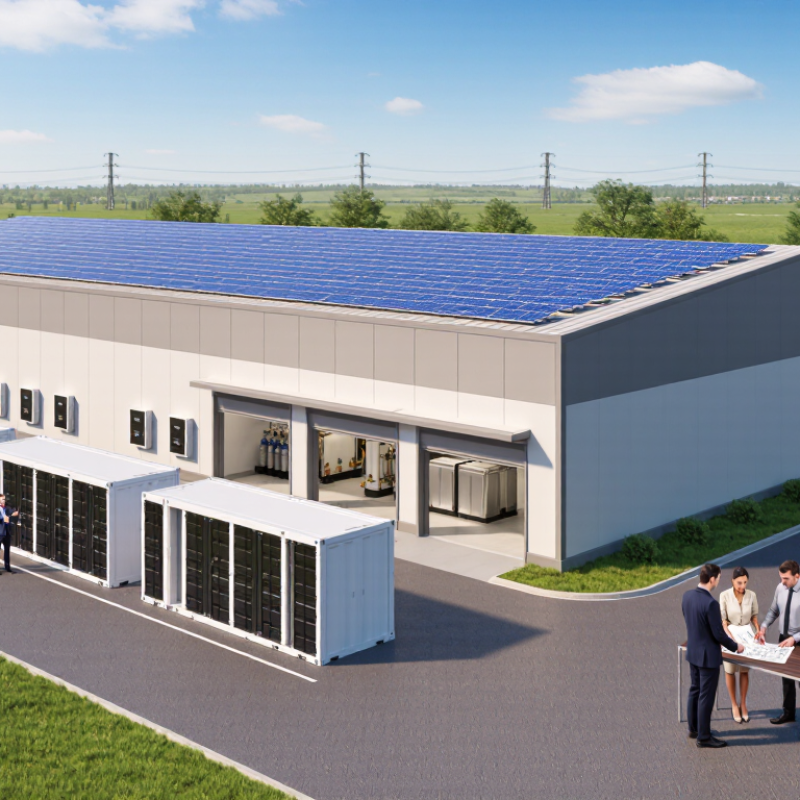
Choosing sustainable energy solutions is no longer a branding exercise for serious businesses. It is an operational decision affecting costs, resilience, compliance, and customer trust. A warehouse roof may hold solar panels, while a factory may need battery storage, heat recovery, or smarter demand controls. The right answer depends on location, energy use, grid reliability, capital limits, and business goals.
Fatih Birol, Executive Director of the International Energy Agency, said, “The clean energy transition is happening worldwide and it’s unstoppable.” His observation gives businesses useful direction, but it does not provide a universal blueprint. Managers should examine twelve months of utility bills, hourly load profiles, equipment age, roof condition, and local renewable resources. A qualified energy consultant can then compare solar, wind, electrification, efficiency upgrades, storage, and verified power purchasing options. Each proposal should include installation costs, maintenance needs, expected savings, emissions data, warranties, and end-of-life responsibilities.
Numbers matter. So does experience. A solution that performs well in one facility may disappoint in another. An early estimate can also prove too optimistic. That possibility deserves attention. Businesses should test assumptions through a pilot project, independent technical review, and transparent supplier references. They should also ask how performance will be measured after installation. Reliable sustainable energy solutions improve when companies monitor real output, seasonal changes, downtime, and employee feedback. The strongest strategy may begin with insulation and efficient motors, not expensive generation equipment. Progress can be practical, imperfect, and still meaningful.
Defining Sustainable Energy Goals for a Business
Defining sustainable energy goals gives a business direction beyond vague promises. Start with a twelve-month energy baseline. Record electricity, heating fuel, operating hours, floor area, and production volume. Use utility bills, meter readings, and maintenance records. Missing data is common, but it should be documented rather than hidden.
A practical goal might reduce energy use per product by 15% within three years. Another goal could increase verified renewable electricity to 40% by 2028. Make each target measurable, time-bound, and linked to normal business activity. A warehouse may track kilowatt-hours per shipment, while an office may measure energy per employee. Include reliability and cost limits. Cleaner energy should not create unsafe temperatures, unstable operations, or unrealistic financial pressure.
Set responsibility clearly. Facility managers can inspect lighting schedules, compressed-air leaks, insulation, and equipment settings each month. Finance teams can test payback assumptions. External energy auditors can challenge internal estimates and identify overlooked emissions. Review progress quarterly, using the same calculation method. Targets may need adjustment.
That is not failure.
A first baseline can be incomplete, especially across leased sites or changing production lines. Businesses should publish the limitation, improve the data, and avoid claiming more progress than the evidence supports. Scenario planning also helps: compare efficiency upgrades, on-site generation, storage, and cleaner energy purchasing before committing capital. A goal becomes credible when staff can measure it, leaders fund it, and independent evidence can question it.
How to Choose Sustainable Energy Solutions for Business? - Defining Sustainable Energy Goals for a Business
| Priority Area | Business Goal | Recommended Solution | Core KPI | Relevant Data or Benchmark | Suggested Measurement Method | Decision Rule | Reference |
|---|---|---|---|---|---|---|---|
| 1. Measure | Establish a reliable energy and emissions baseline before investing in projects. | Install interval electricity meters, sub-meter major loads, and create an energy register covering buildings, vehicles, and process equipment. | Energy intensity (kWh/m² or kWh per unit of output) |
Energy performance should be compared against the same facility, operating hours, production volume, weather conditions, and occupancy over time. | Collect monthly utility data and meter readings; normalize for production and heating or cooling degree days where relevant. | Do not approve a major project until at least 12 consecutive months of usable baseline data are available, unless safety or regulatory requirements require immediate action. | ISO 50001 energy-management principles; GHG Protocol accounting guidance |
| 2. Reduce Demand | Lower energy consumption before purchasing additional supply. | Building controls, insulation, compressed-air leak management, motor optimization, production scheduling, and employee operating procedures. | Annual energy reduction (kWh and %) |
Demand reduction generally lowers both energy costs and the size of renewable generation or storage systems required. | Calculate savings as: baseline energy use minus weather-, production-, and occupancy-adjusted post-project energy use. | Prioritize measures with verified savings, low operational disruption, and a positive life-cycle financial return. | International Energy Agency; ISO 50001 measurement and verification practices |
| 3. Electrify | Replace direct fossil-fuel use where electricity can provide the required service efficiently. | Electric heat pumps, induction equipment, electric forklifts, electric water heating, and electric vehicle charging where operationally suitable. | Fossil-fuel use avoided (litres, therms, or kWh) |
Modern heat pumps commonly deliver approximately 3–5 units of heat for each unit of electricity under suitable operating conditions. | Track delivered heat or service output, electricity consumption, backup-fuel consumption, and operating temperature. | Choose electrification when total cost of ownership, grid capacity, reliability, and required temperature range are acceptable. | International Energy Agency, The Future of Heat Pumps, 2022 |
| 4. Use Renewables | Increase the share of renewable electricity used by the business while maintaining reliability. | On-site solar or wind where feasible, renewable electricity contracts, or documented energy attribute certificates that meet local rules. | Renewable electricity share (%) |
Renewables supplied approximately 30% of global electricity generation in 2023, showing that renewable electricity is a major component of the power system. | Report renewable electricity by source, location, contract type, generation period, and consumption period. | Use on-site generation first where it is cost-effective; assess grid constraints and contract quality before relying on off-site procurement. | International Energy Agency, Global Energy Review 2024 |
| 5. Improve Lighting | Reduce electricity use from lighting while improving visibility, safety, and occupant comfort. | High-efficiency LED lighting, occupancy sensors, daylight controls, and scheduled dimming. | Lighting electricity use (kWh/year) |
LED lighting can use up to 75% less energy than incandescent lighting, although actual savings depend on operating hours, controls, and replacement equipment. | Compare fixture wattage, operating hours, light levels, maintenance costs, and annual electricity consumption before and after installation. | Prioritize locations with long operating hours, frequent failures, high heat loads, or substantial lighting demand. | U.S. Department of Energy, LED lighting efficiency guidance |
| 6. Manage Carbon | Reduce greenhouse-gas emissions consistently across direct operations and purchased energy. | Set separate goals for Scope 1 emissions from owned or controlled sources and Scope 2 emissions from purchased electricity, heat, steam, or cooling. | tCO₂e per year and per unit of output | Scope 1 and Scope 2 emissions should be quantified separately because operational fuel use and purchased-energy emissions require different reduction actions. | Use activity data multiplied by current, documented emission factors; disclose organizational boundary, reporting year, and calculation method. | Use absolute emissions and emissions intensity together so that business growth does not hide total climate impact. | Greenhouse Gas Protocol, Corporate Standard and Scope 2 Guidance |
| 7. Add Flexibility | Reduce peak-demand charges and improve resilience during grid interruptions or price volatility. | Battery storage, thermal storage, demand response, flexible charging, backup generation transition plans, and automated energy management. | Peak demand (kW) and outage hours avoided |
Storage value depends on tariff structure, load profile, cycling limits, round-trip efficiency, and the need for backup power. | Analyze at least 12 months of interval load data and model peak reduction, dispatch frequency, usable capacity, and degradation. | Proceed when the combined value of bill savings, resilience, and avoided operational losses exceeds life-cycle cost. | International Energy Agency; standard utility demand-response and storage evaluation methods |
| 8. Govern | Make sustainable energy performance part of normal business management. | Assign executive ownership, define annual budgets, train facility teams, review KPIs quarterly, and document corrective actions. | Goal completion rate (%) |
Energy-management systems are most effective when objectives, responsibilities, data quality, operational controls, and continual improvement are documented. | Use a quarterly dashboard showing energy use, emissions, project status, financial performance, and deviations from target. | Require every energy goal to have an owner, baseline, deadline, budget, measurement method, and escalation process. | ISO 50001 energy-management system framework |
Related Posts
-
How to Choose Green Energy Systems for Business?
-

Top 10 Energy Storage Systems in China for Sustainable Future?
-
How to Choose Energy Storage Systems for Global Buyers?
-
What is Solar Energy Projects and How Do They Benefit the Environment?
-
Top Solar Energy Panel Trends in 2026 for Global Buyers?
-
10 Tips for Successful Solar Energy Adoption