What Are the 2026 Top Solar Panel Systems?
Choosing the best solar panel systems in 2026 requires more than comparing efficiency ratings. A reliable system must match the roof, climate, electricity use, and local grid conditions. Panel performance matters, but so do inverters, mounting hardware, monitoring tools, warranties, and installer quality.
Fatih Birol, Executive Director of the International Energy Agency, described solar power clearly: “Solar PV is the new king of electricity markets.” His statement reflects solar’s expanding role, but it does not make every system equally suitable. A high-efficiency panel may perform well on a small, shaded roof. A less expensive panel could deliver better value on a large, sunny surface. Battery storage can improve resilience, although it adds cost, weight, and maintenance considerations.
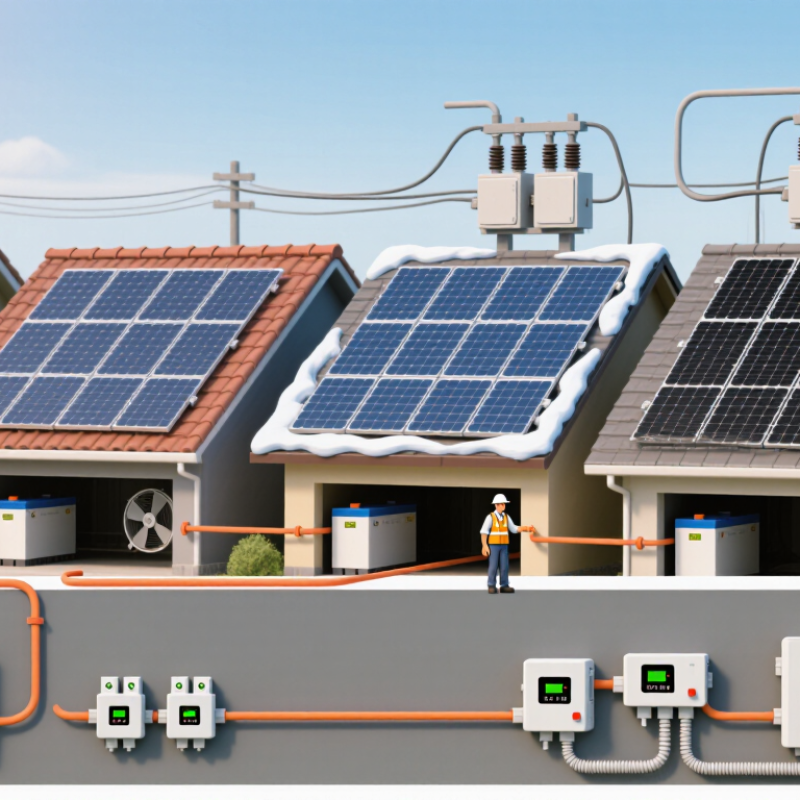
This guide examines the 2026 top solar panel systems through practical evidence. It considers real-world energy production, temperature performance, degradation rates, safety features, storage compatibility, and long-term service support. It also looks at installation details, such as roof orientation, inverter placement, cable protection, and access for repairs. Small choices matter.
No ranking is perfect. Manufacturer data often comes from controlled laboratory testing, while rooftops face dust, heat, snow, partial shade, and changing electricity prices. Some promising systems may have limited field history. That uncertainty deserves attention. The strongest choice is not always the newest model or the highest-rated panel. It is the system that performs reliably, fits the property, and remains supportable for decades.
What Defines a Top 2026 Solar System: 22–24% Efficiency and ≤0.3% Degradation
What Are the 2026 Top Solar Panel Systems?
A top 2026 solar system should deliver more than attractive laboratory numbers. Its panels should reach roughly 22–24% conversion efficiency under standard test conditions. This range matters on compact rooftops, where every square metre is valuable. The Fraunhofer Institute for Solar Energy Systems reported commercial module efficiencies near this level in its Photovoltaics Report 2024. Real output still changes with heat, dust, wiring, and shade.
Degradation is equally important. A strong system should lose no more than 0.3% of its rated capacity annually. After 25 years, that simple rate preserves about 92.7% of the original output, before other losses. The International Energy Agency Photovoltaic Power Systems Programme identifies long-term reliability and performance loss as central factors in lifecycle value. Check the testing method carefully. Some figures describe only the panel, not the complete installation.
Small details become visible during operation. On a hot afternoon, ventilation beneath rooftop panels can influence production. An inverter with clear monitoring can reveal abnormal drops before they become expensive. NREL’s Best Research-Cell Efficiency Chart also shows why laboratory records should not be confused with commercial system performance. They are different worlds. I would question any claim using only a peak efficiency number. A practical review should examine temperature coefficients, warranty conditions, installation quality, and measured field data. Even a 0.3% degradation promise may disappoint when poor drainage leaves panels dusty for months. Performance is engineered, then maintained.
How Storage Changes System Value: 85–95% Round-Trip Efficiency and Backup
What Are the 2026 Top Solar Panel Systems?
In 2026, a strong solar system should be judged by delivered energy, not panel output alone. Storage changes that calculation. NREL’s 2024 Annual Technology Baseline uses about 85% round-trip efficiency for lithium-ion storage assumptions. Some integrated systems can approach 90–95% under favorable conditions. A 10-kilowatt-hour charge may return only 8.5–9.5 kilowatt-hours after conversion losses.
That loss becomes visible after sunset. A battery can run a refrigerator, router, lights, and medical equipment during an outage. However, backup performance depends on usable capacity, inverter limits, reserve settings, and local temperature. The U.S. Department of Energy notes that storage value includes resilience, demand management, and energy shifting. These benefits may matter more than a small difference in panel efficiency.
Real-world testing still deserves caution. NREL’s storage research highlights performance variation across operating conditions and system designs. A clean spreadsheet can hide battery degradation, standby consumption, and cloudy-week shortages. I would examine hourly load data before choosing capacity. Oversizing storage may improve backup, but it can also increase cost and leave capacity underused. IEA PVPS reports continued rapid solar deployment, yet more generation does not automatically create more household value. The best 2026 systems will pair efficient storage with sensible backup circuits, clear controls, and honest performance assumptions.
What Are the 2026 Top Solar Panel Systems? - How Storage Changes System Value: 85–95% Round-Trip Efficiency and Backup
| System configuration |
Typical PV capacity |
Usable battery storage |
Typical round-trip efficiency |
Backup output |
Approximate essential-load backup |
Best-fit application |
| Solar-only grid-tied system |
4–8 kW DC |
None |
Not applicable |
No outage backup |
0 hours during grid outages |
Reducing daytime electricity purchases where the grid is reliable |
| Solar plus AC-coupled battery |
5–10 kW DC |
10–20 kWh |
85–90% |
3–8 kW continuous |
8–24 hours |
Existing solar installations needing peak-rate shifting and basic backup |
| Solar plus DC-coupled battery |
6–12 kW DC |
10–25 kWh |
88–94% |
5–10 kW continuous |
12–36 hours |
New installations seeking higher solar capture and lower conversion losses |
| Whole-home solar and storage system |
8–15 kW DC |
20–40 kWh |
86–92% |
8–15 kW continuous |
18–48 hours |
Homes requiring refrigeration, communications, pumps, HVAC controls, and selected high-power loads |
| Solar, storage, and electric-vehicle-ready system |
8–16 kW DC |
15–30 kWh |
85–93% |
7–12 kW continuous |
12–36 hours, excluding vehicle charging |
Homes that need load management for vehicle charging and future energy flexibility |
| High-resilience solar and storage system |
10–20 kW DC |
30–60 kWh |
85–91% |
10–20 kW continuous |
24–72 hours for essential loads |
Areas with frequent outages, medical equipment, water pumps, or critical communications needs |
How storage changes system value: Battery storage can increase self-consumption, shift solar energy to evening periods, reduce exposure to time-of-use electricity rates, and provide backup power. Actual performance depends on battery state of charge, temperature, inverter loading, reserve settings, wiring losses, battery chemistry, and local operating conditions.
Data note: Values are representative engineering ranges for residential systems. Backup duration assumes essential loads averaging approximately 0.5–1.5 kW and does not include continuous whole-home heating, cooling, electric resistance heating, or electric-vehicle charging unless specifically designed for those loads.
How to Compare Costs Using LCOE, Payback, and 25–30-Year Warranties
The top solar panel system is not simply the one with the highest efficiency. Compare installed cost, annual output, degradation, financing, and warranty coverage together. NREL’s Q1 2024 benchmark reports residential photovoltaic costs near $3.15 per watt in the United States. Local labor and permitting can change that figure significantly. Location matters more than many sales estimates suggest.
Levelized cost of energy, or LCOE, converts lifetime costs into each generated kilowatt-hour. Lazard’s Levelized Cost of Energy+ Version 17.0 places utility-scale solar around $29–$92 per megawatt-hour, before storage and project-specific financing. A household system may show a higher LCOE because its scale is smaller. Calculate it using net cost, expected production, maintenance, inverter replacement, and degradation. Do not use the first-year output alone.
Payback measures when savings recover the initial investment. A seven-year payback can become ten years after tariff changes, weaker sunlight, or loan interest. NREL field research commonly reports photovoltaic degradation near 0.5% annually, though real installations vary. Review 25–30-year performance warranties carefully. They usually promise minimum output, not free repairs or unchanged electricity savings. My spreadsheet can still look precise while missing roof replacement, downtime, or export limits. That is the uncomfortable part. Check the warranty exclusions and installer workmanship terms line by line.