Why Choose Solar Energy Equipment for Your Business?

Why Choose Solar Energy Equipment for Your Business?

For many businesses, energy costs feel like a silent leak. Choosing solar energy equipment can turn unused roof space into a productive business asset. Panels, inverters, mounting systems, and batteries each serve different operational needs. A retail store may use daytime generation for lighting, cooling, and refrigeration. A warehouse may reduce grid purchases while protecting valuable floor space. The opportunity is practical, but it is not automatic.

A reliable decision begins with measured electricity data, not attractive brochures. Review twelve months of bills, peak demand, roof condition, shading, and future expansion plans. An experienced installer should explain production estimates, equipment warranties, monitoring tools, and maintenance schedules clearly. Independent engineering checks may reveal drainage problems, structural limits, or poor cable routes before installation. Battery storage can improve resilience, yet it adds cost, controls, and replacement considerations. Small details matter. A poorly matched inverter can waste potential and complicate service.

Businesses should compare financing, insurance, incentives, and local connection requirements with qualified advisers. Savings depend on weather, operating hours, tariffs, equipment quality, and disciplined maintenance. Claims of instant payback deserve careful questioning. Solar power can lower emissions and stabilize some energy expenses, but it cannot remove every business risk. Real projects sometimes disappoint when operating patterns change after installation. That lesson is uncomfortable. A sound plan leaves room for uncertainty, tracks actual performance, and adjusts expectations honestly. With professional design and transparent reporting, solar energy equipment can become a dependable part of long-term business planning.
Why Choose Solar Energy Equipment for Your Business?

What Solar Energy Equipment Includes and How It Works

Why Choose Solar Energy Equipment for Your Business?

What Solar Energy Equipment Includes and How It Works

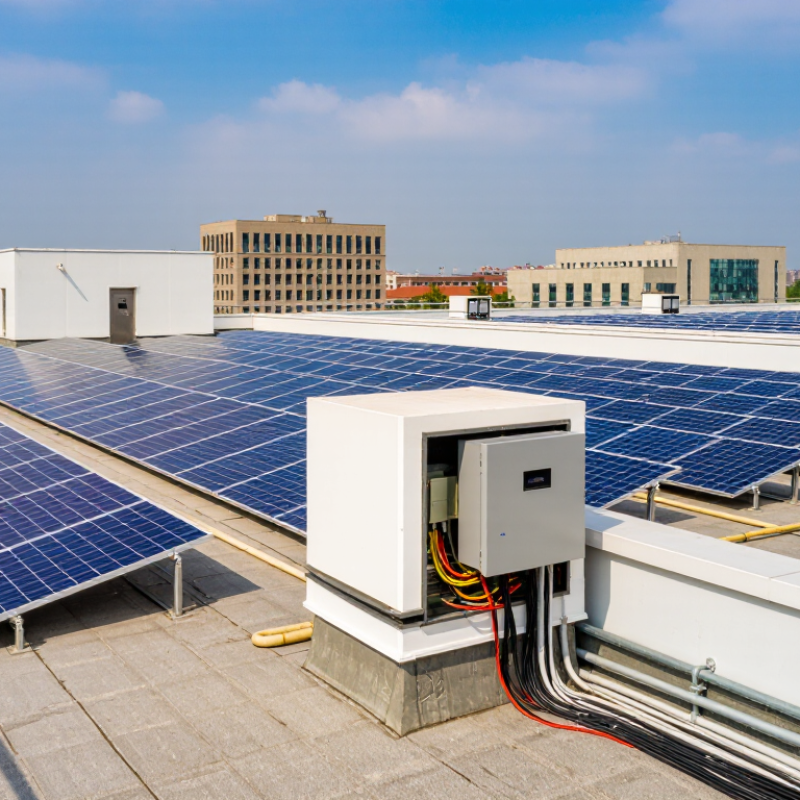
Solar energy equipment is more than rooftop panels. A complete system usually includes photovoltaic modules, mounting structures, cables, an inverter, monitoring tools, and sometimes batteries. Panels capture sunlight and produce direct current electricity. The inverter changes it into alternating current for office equipment, lighting, and production machines.

A smart design begins with a site assessment. Technicians review roof strength, shade patterns, local weather, and daily electricity use. Monitoring software then tracks production and system performance. Batteries can store extra daytime power for evening operations, but they also add cost, weight, and maintenance needs. The first design is rarely perfect. Energy demand can change after installation. That detail deserves honest attention.

Tips: Check the equipment’s safety certifications and warranty terms. Ask for a clear maintenance plan. Keep ventilation around inverters. Clean panels only when inspection shows buildup. Do not assume the largest system is the best system. A smaller, well-matched system may perform more reliably. During planning, compare expected output with real consumption records, not guesses. Calculations can still miss future expansion, which is why leaving reasonable capacity may be practical.

How Solar Power Can Reduce Business Energy Costs

Why Choose Solar Energy Equipment for Your Business?

Electricity bills can rise sharply during afternoon production hours. Solar equipment can generate power when many businesses need it most. A warehouse roof, for example, may produce electricity while refrigeration units and conveyors are operating. This direct use can reduce grid purchases and exposure to changing energy rates. Battery storage may also discharge during expensive peak periods. However, savings depend on local tariffs, roof direction, shading, and equipment maintenance.

The International Renewable Energy Agency reported that utility-scale solar photovoltaic costs fell by about 90% between 2010 and 2023. Its 2023 cost report also identified solar power as one of the most cost-competitive new electricity sources. Lazard’s 2024 levelized cost analysis estimated unsubsidized utility-scale solar at roughly 2.9 to 9.2 cents per kilowatt-hour. These figures are useful benchmarks, not guaranteed business prices. Installation, financing, grid upgrades, and permits can change the result.

Measure before buying.

A practical assessment should compare twelve months of bills with hourly load data. It should examine demand charges, weekend consumption, and seasonal production changes. In my experience, businesses often overestimate panel size and underestimate connection delays. That mistake can weaken payback. Solar monitoring can reveal underperforming strings, dust buildup, or inverter faults before they become costly. Even so, projected savings remain imperfect. Weather varies, electricity prices change, and batteries eventually need replacement. A careful financial model should test conservative, expected, and difficult scenarios before equipment is ordered.

Key Environmental and Operational Benefits for Businesses

Solar energy equipment can turn an unused rooftop into a working business asset. The environmental case is increasingly measurable. IRENA’s Renewable Capacity Statistics 2024 reported more than 1,400 gigawatts of global solar capacity by the end of 2023. Solar generation produces no direct operational emissions, unlike diesel generators or coal-fired electricity. For a warehouse, this can mean quieter loading areas and fewer emissions near workers.

The operational benefits are practical. Panels can generate electricity beside offices, factories, and cold-storage rooms, reducing dependence on distant power stations. The International Energy Agency’s Renewables 2024 report identifies solar photovoltaic power as the fastest-growing renewable technology. Battery storage can preserve excess midday electricity for evening refrigeration, security systems, or production equipment. Less grid exposure helps businesses manage volatile energy costs. Still, savings depend on roof orientation, local sunlight, tariffs, and maintenance. That assumption is risky.

A reliable project begins with measured electricity data, not optimistic estimates. Engineers should examine hourly demand, roof strength, shading, inverter capacity, and fire-safety requirements. IRENA also reports that renewable power costs continued to fall in recent years, but installation quality remains important. Dusty panels lose output. Batteries degrade. Poorly matched equipment can create disappointing returns. A business may also need grid approvals and backup planning during cloudy periods. Solar is powerful, but not effortless. Clear monitoring records and independent performance checks make the investment more accountable.

Factors to Consider Before Choosing Solar Equipment

Why Choose Solar Energy Equipment for Your Business?

Choosing solar equipment is not simply a matter of comparing panel prices. The right system should match your building, electricity habits, budget, and future plans. Begin with a professional site assessment. Check roof age, shade from nearby trees, structural strength, and available installation space. A warehouse with strong afternoon demand may need different equipment from a small office with steady daytime use.

Review your electricity bills for at least twelve months. This reveals seasonal demand and helps estimate system capacity. Ask qualified installers about panel efficiency, inverter performance, battery safety, monitoring features, and expected maintenance. Confirm product testing, warranty terms, replacement procedures, and installer qualifications. Clear documentation matters. Vague promises do not.

Tips: Request a written energy forecast. Compare performance under cloudy conditions, not only bright sunlight. Check whether the equipment can expand later. Keep emergency access around batteries and electrical panels. Ask who will inspect the system after installation. My early estimate was too optimistic because I ignored winter shading. That mistake changed the design. Small details can become expensive. Also, the cheapest equipment may create higher service costs over time, while premium specifications may exceed your actual needs. Leave room for doubt, and verify every major assumption with measured data.

How to Plan, Install, and Maintain a Business Solar System

Why Choose Solar Energy Equipment for Your Business?

Planning a business solar system starts with evidence, not enthusiasm. Review twelve months of electricity bills, operating hours, peak demand, and future expansion plans. A qualified solar engineer should inspect the roof, structure, shading, drainage, and available electrical capacity. The roof decides. A flat warehouse roof may need ballast, while a metal roof may require carefully spaced mounting points. Include permits, utility approvals, fire access, and worker safety in the schedule. Local requirements can change, so verify them with the relevant authorities.

Installation quality affects performance for decades. Use certified equipment and trained electrical contractors who follow applicable codes and documented procedures. Keep cable routes short, protected, and clearly labeled. Leave safe maintenance paths around panels and inverters. Battery storage may improve resilience, but it also adds ventilation, fire-safety, and replacement planning. A lower purchase price can become expensive when access is poor or warranties are unclear. Measure twice.

Maintenance should be practical and recorded. Set a monthly monitoring check for unusual output drops, alarms, and overnight energy use. Inspect panels, fasteners, seals, cables, and vegetation at least annually, or more often in dusty or coastal areas. Clean panels only when testing shows meaningful soiling losses. Automatic alerts are useful, but they are not a substitute for inspection. The first design is rarely perfect. Actual production, staff behavior, and changing workloads may reveal assumptions that need revision. Keep inspection reports, repair dates, meter readings, and updated electrical drawings in one accessible file.

Why Choose Solar Energy Equipment for Your Business? - How to Plan, Install, and Maintain a Business Solar System

Practical planning, installation, performance, and maintenance benchmarks for commercial solar projects

Planning Dimension Typical Business Benchmark Recommended Action Business Relevance
Primary objective Reduce purchased electricity, improve energy resilience, or meet sustainability targets Define the priority before selecting equipment or system size The objective determines whether the design should emphasize energy production, peak-demand reduction, backup power, or emissions reduction.
Electricity consumption Review at least 12 consecutive months of utility bills and interval-load data where available Separate annual energy use from monthly peak demand and operating hours Accurate load data prevents oversizing and helps match solar generation with the business’s operating schedule.
Solar system size Common commercial projects range from tens of kilowatts to several megawatts, depending on load and available space Use annual electricity demand, local solar resource, roof or land area, and export rules to set the system capacity A correctly sized system improves self-consumption and reduces unnecessary equipment and interconnection costs.
Sizing calculation Estimated annual output = system capacity × local peak-sun-hours × 365 × performance ratio Use a site-specific production model rather than relying only on regional averages The calculation accounts for sunlight, temperature, wiring, inverter, soiling, shading, and other system losses.
Performance ratio Approximately 75%–90% for many well-designed grid-connected systems Request assumptions for shading, temperature, module mismatch, availability, and electrical losses A transparent performance ratio makes energy-yield estimates easier to compare and verify.
Roof or ground area Modern crystalline-silicon modules commonly provide about 180–230 watts per square metre at module level Allow additional space for setbacks, access paths, fire safety, equipment, and structural constraints Usable area, not total roof area, is the key constraint when estimating achievable capacity.
Roof condition Solar equipment is commonly planned for roofs with sufficient remaining service life and verified structural capacity Complete a structural survey and address roof repairs or replacement before installation Installing solar before major roof work can increase future removal, storage, and reinstallation costs.
Equipment selection Core equipment includes PV modules, inverters, mounting systems, protection devices, wiring, monitoring, and optional batteries Compare efficiency, operating temperature range, certifications, warranty terms, serviceability, and compatibility Equipment quality affects energy yield, safety, downtime, and long-term operating costs.
Battery storage Storage capacity should be based on critical-load demand, outage duration, tariff structure, and solar overproduction Prioritize essential circuits and specify usable capacity, power rating, round-trip efficiency, and safety controls Batteries can increase self-consumption and provide backup, but they add capital cost and require additional safety planning.
Grid interconnection Requirements vary by utility and may include application, engineering review, protection settings, inspection, and meter approval Confirm export limits, interconnection costs, technical rules, and approval timelines before procurement Interconnection conditions can affect system size, project schedule, and financial performance.
Installation process Typical stages include design, permitting, procurement, structural work, electrical installation, inspection, and commissioning Use a documented construction schedule with inspection and commissioning checkpoints Defined milestones reduce delays and provide evidence that the installed system matches the approved design.
Safety and compliance Electrical, fire, structural, occupational-safety, and access requirements apply to commercial installations Require qualified electrical work, clear disconnect labeling, cable management, access routes, and emergency procedures Compliance protects personnel, property, insurers, and the continuity of business operations.
Monitoring and verification Track daily energy production, system availability, inverter status, alarms, and weather-adjusted performance Set baseline production expectations and establish an alert-response process Monitoring can identify underperformance, equipment faults, communication failures, and abnormal energy patterns.
Routine maintenance Inspect equipment at least annually; increase inspection frequency in dusty, coastal, snowy, or heavily polluted environments Check modules, mounting hardware, cables, connectors, inverters, drainage, vegetation, and safety labels Preventive maintenance helps preserve output and reduces the risk of avoidable failures.
Cleaning strategy Cleaning frequency depends on rainfall, dust, bird activity, pollen, and the measured loss from soiling Clean only when the expected energy gain exceeds the cost and safety risk Regular cleaning is not automatically necessary in every location; performance data should guide the decision.
Expected service life PV modules are commonly designed for 25–30 years or more; inverters and batteries may require earlier replacement Model component replacement, warranty limits, and end-of-life recycling or disposal Lifecycle planning provides a more realistic view of total ownership cost than initial purchase price alone.
Module degradation Many crystalline-silicon PV systems experience gradual output degradation, often modeled at approximately 0.3%–0.8% per year Use the project-specific degradation assumption stated in the equipment documentation and financial model Degradation affects long-term energy yield, savings forecasts, and investment returns.
Financial evaluation Evaluate capital cost, energy savings, demand-charge effects, incentives, financing, export revenue, maintenance, and replacement costs Compare net present value, internal rate of return, levelized cost of energy, and simple payback Multiple financial metrics reduce the risk of making a decision based on payback alone.
Emissions reduction Avoided emissions depend on solar production and the carbon intensity of displaced grid electricity Calculate avoided emissions using a documented regional or utility-specific emissions factor A transparent method supports credible sustainability reporting and internal carbon accounting.
Contact Us