How to Choose the Best Solar Energy Equipment?
Choosing the best solar energy equipment requires more than comparing panel wattage or online prices. The right system must fit your roof, climate, electricity demand, budget, and maintenance capacity. A 450-watt panel may look impressive, yet poor shading performance can reduce its real output. Small details matter.
The International Energy Agency reported that global renewable capacity additions reached almost 510 gigawatts in 2023. Solar photovoltaic systems represented about three-quarters of this growth. IRENA also recorded solar as the leading source of new renewable capacity that year. These figures show strong market momentum, but they do not make every product reliable. Testing standards, inverter efficiency, temperature performance, battery safety, warranty terms, and installer experience deserve equal attention. Read the technical documents.
Fatih Birol, Executive Director of the IEA, has said, “Solar PV and wind are now the cheapest sources of new electricity generation in most markets.” Cost matters, but lifetime value matters more. A dependable system should produce stable electricity through hot afternoons, cloudy mornings, and seasonal demand changes. Look for verified certifications, transparent degradation rates, local service support, and realistic production estimates. Ask how performance will be measured after installation. This is where many buyers become too optimistic. My own preference would be a slightly smaller system with better monitoring and support, rather than a larger system with uncertain after-sales service. The best choice is not always the most powerful one. It is the equipment that performs reliably in your actual home.
Define Your Solar Energy Needs and Site Conditions
Choosing solar equipment begins with a clear picture of your electricity use. Review twelve months of utility bills, not one unusually high month. Note seasonal loads from air conditioners, heaters, pumps, and electric vehicles. In practice, a home using 900 kilowatt-hours in July needs a different design from one using 350. Decide whether your priority is lower bills, backup power, or both. These goals affect panel capacity, inverter size, and battery storage. Be honest about your budget and available maintenance time. Simple is often safer.
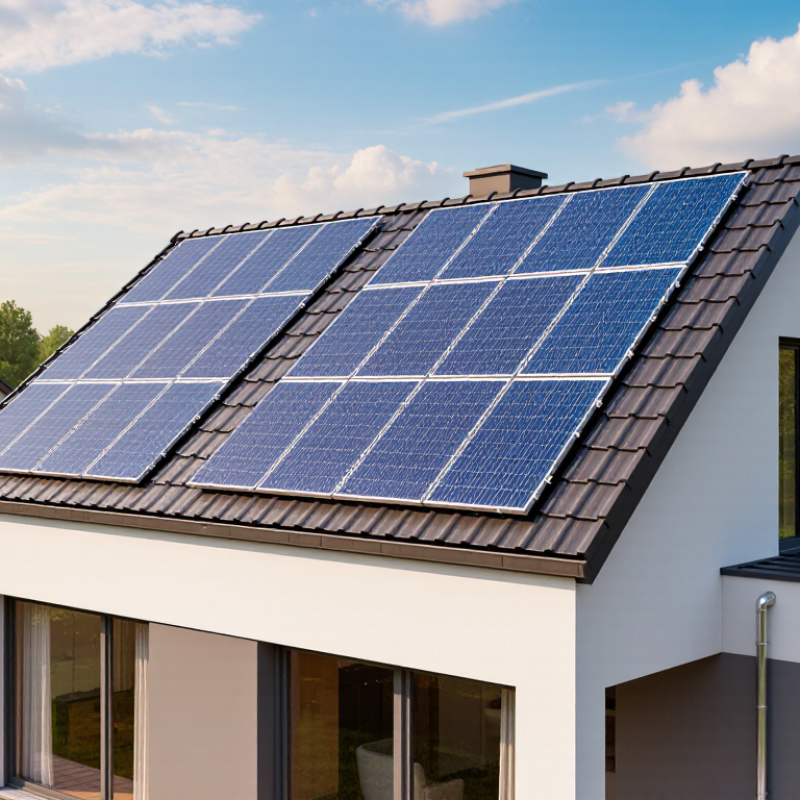
Walk around the roof at different times of day. Record shade from trees, chimneys, and nearby buildings. A clear roof at noon may be shaded at 4 p.m. Measure roof orientation, pitch, usable area, and structural condition. Look for cracked tiles, corrosion, leaks, or weak mounting points. A professional assessment should confirm wind exposure, snow loads, local sunlight, and electrical capacity. Ground-mounted systems require space, drainage, trenching, and secure access. Do not estimate shading from a single photograph. That shortcut can distort production forecasts.
Match equipment to measured conditions, not sales estimates. Ask for a written energy model showing expected monthly production and losses. It should account for temperature, wiring, inverter conversion, dirt, and shade. Check whether the proposed equipment meets local electrical rules and fire-safety requirements. Use qualified, licensed professionals where required, and verify warranties, monitoring, and service terms in writing. Keep copies of permits and test reports. Your first design may be wrong. Recheck it after a roof inspection and a full-year load review. Small omissions become expensive corrections.
How to Choose the Best Solar Energy Equipment? – Define Your Solar Energy Needs and Site Conditions
Use your electricity demand, available sunlight, roof or ground conditions, and backup requirements to match the main solar equipment with the site.
| Assessment Dimension | Typical Site or User Condition | Relevant Data or Design Indicator | Recommended Equipment Direction | Key Selection Consideration |
|---|---|---|---|---|
| Monthly Electricity Use | Small household with moderate appliance use | Approximately 200–500 kWh per month | Residential photovoltaic system with an estimated capacity of about 2–5 kW, subject to local solar resource and roof conditions | Use 12 months of utility bills when estimating system size rather than relying on a single month. |
| High Electricity Demand | Large household, electric heating, workshop, or other energy-intensive loads | More than 1,000 kWh per month or large short-duration loads | Higher-capacity PV array, carefully sized inverter, and possible load-management equipment | Check the maximum simultaneous load and motor-starting current, not only total annual energy use. |
| Daytime Energy Use | Energy is mainly consumed while the sun is available | Air conditioning, pumps, commercial equipment, or office loads operate during daylight hours | Grid-connected PV system with an inverter sized for the expected AC load | Direct daytime consumption can reduce the amount of battery storage required. |
| Evening and Nighttime Use | Most electricity is consumed after sunset | Lighting, cooking, electronics, or heating loads occur mainly in the evening | PV system combined with battery storage or a grid-export strategy | Battery capacity should be based on critical loads, desired backup duration, and usable battery energy. |
| Backup Requirement | Reliable power is needed during grid outages | Critical loads include refrigeration, communications, medical devices, lighting, or water pumps | Hybrid inverter with battery storage and a dedicated critical-loads panel | A standard grid-tied inverter normally shuts down during a grid outage unless it has approved backup functionality. |
| Roof Orientation | Roof faces toward the equator with limited shading | In the Northern Hemisphere, south-facing surfaces are generally favorable; in the Southern Hemisphere, north-facing surfaces are generally favorable | Conventional string inverter system may be suitable when module conditions are similar | Actual output depends on latitude, roof pitch, weather, orientation, and shading. |
| East–West Roof | Roof planes face east and west or have multiple roof directions | Different module groups receive sunlight at different times of day | Multi-input string inverter or module-level power electronics where appropriate | An east–west layout can spread generation across the morning and afternoon but may have a lower peak output than an ideal single-orientation layout. |
| Partial Shading | Trees, chimneys, nearby buildings, or roof structures shade part of the array | Shading varies by hour and season across the module area | Module-level optimizers or microinverters may help manage mismatched module performance | Remove or avoid shading where practical; electronic mitigation does not eliminate the energy lost from blocked sunlight. |
| Available Installation Area | Limited roof or ground space | Common crystalline-silicon modules are typically around 1.7–2.2 m² each | Higher-efficiency modules may provide more rated power within the available area | Reserve space for roof setbacks, access paths, structural clearances, and future maintenance. |
| Roof Condition | Roof is old, damaged, or likely to be replaced soon | Remaining roof service life is shorter than the expected PV system life | Repair or replace the roof before installing the mounting system | Solar modules commonly remain in service for decades, so the roof structure and waterproofing should be assessed first. |
| Ground Installation | Roof space is insufficient but suitable land is available | Unshaded area with stable soil, drainage, and access for maintenance | Ground-mount racking with string inverters or other suitable power-conversion equipment | Consider land use, fencing, snow or wind loads, drainage, vegetation control, and local permitting. |
| Hot Climate | High ambient temperature and strong solar exposure | PV module output generally decreases as cell temperature rises above standard test conditions | Equipment with suitable temperature ratings and adequate ventilation | Review the module temperature coefficient and inverter operating-temperature range. |
| Cold or Snowy Climate | Low temperatures, snowfall, or repeated freeze–thaw cycles | Snow load, wind load, low-temperature voltage, and snow shedding must be considered | Mounting hardware and electrical equipment rated for local environmental conditions | Cold temperatures can increase PV string voltage; the maximum system voltage must not be exceeded. |
| Coastal or Corrosive Environment | Salt spray, high humidity, or industrial pollution is present | Increased corrosion exposure for frames, fasteners, enclosures, and mounting components | Corrosion-resistant mounting materials and appropriately rated outdoor enclosures | Confirm material compatibility, ingress protection, and the installation environment specified for each component. |
| Battery Chemistry | Daily cycling and residential backup are required | Usable capacity, continuous power, round-trip efficiency, cycle life, and operating temperature | Lithium iron phosphate batteries are commonly considered for stationary storage because of their thermal and cycle-life characteristics | Compare usable energy rather than only the nameplate capacity, and follow the required battery-management and installation rules. |
| Inverter Sizing | PV array and household loads have different peak characteristics | DC array power, AC output rating, maximum input voltage, MPPT voltage range, and short-circuit current | Inverter selected to comply with electrical limits and the intended DC-to-AC design ratio | Verify voltage and current limits at the lowest and highest expected site temperatures. |
| Grid Connection | Utility service is available and export is permitted | Service voltage, phase configuration, interconnection limit, export rules, and metering requirements | Certified grid-connected or hybrid equipment compatible with local utility requirements | Permits, inspection, protection settings, and interconnection approval may be required before energization. |
| Remote or Off-Grid Site | No reliable utility connection is available | Daily energy demand, peak load, autonomy days, seasonal solar resource, and backup generation needs | Off-grid inverter, PV array, battery bank, charge-control capability, and possibly a backup generator | Off-grid systems require additional capacity for cloudy periods and battery charging losses. |
| Monitoring and Maintenance | Long-term performance tracking is important | Energy production, fault alerts, battery state of charge, and system availability | Monitoring gateway or inverter-based monitoring with accessible performance data | Recommended for every system |
Related Posts
-
China Top 10 Solar Power Generation Projects Transforming Energy Landscape?
-
10 Best Solar Energy Solutions for Sustainable Living?
-
Best Hybrid Solar Systems for Global Buyers in 2026?
-
What is Solar Power Generation and How Does It Work?
-
China Top Benefits of Solar Energy for a Sustainable Future
-
10 Tips for Buying Green Energy Systems