China Top On Grid Solar Systems Suppliers?
China remains a major manufacturing base for on grid solar systems, but supplier selection requires more than comparing product prices. Buyers must examine module quality, inverter compatibility, grid certification, warranty terms, and after-sales support. A low quotation can hide costly gaps in testing, documentation, or replacement service.
Fatih Birol, Executive Director of the International Energy Agency, described solar power clearly: “Solar PV is becoming the king of electricity markets.” His observation reflects the rapid expansion of grid-connected solar, yet it does not make every supplier equally dependable. A reliable manufacturer should provide traceable component data, verified performance records, and clear responsibility during installation and maintenance.
Look closely.
For example, a serious supplier should explain how its inverter handles voltage fluctuation, remote monitoring, and grid disconnection protection. It should also show factory quality controls rather than relying only on attractive brochures. Project experience matters, especially when systems operate across different climates, utility rules, and rooftop conditions.
This guide examines China’s leading on grid solar systems suppliers through practical and technical criteria. It considers manufacturing capacity, certification, system design expertise, export experience, and long-term service. Some rankings may remain subjective. Supplier performance can change, and public information is not always complete. That is why independent verification remains essential before signing a contract.
The strongest choice is not always the largest company. It is the supplier that communicates clearly, documents its claims, and supports the system after installation.
What Are On-Grid Solar Systems and How Do They Work?
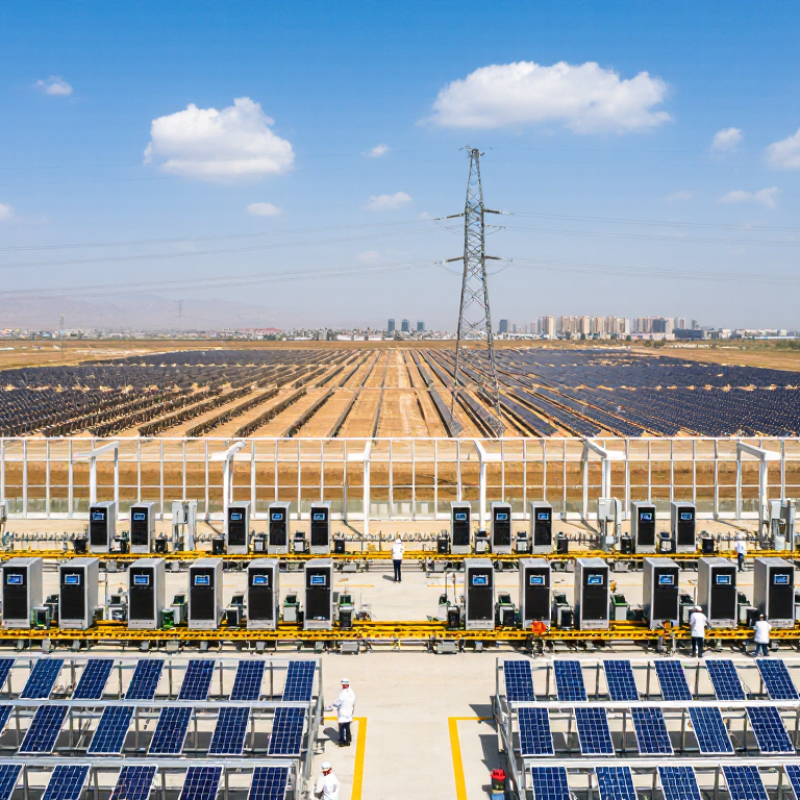
An on-grid solar system converts sunlight into electricity for immediate use in a building. Solar modules produce direct current, while an inverter changes it into alternating current for household appliances. The inverter also synchronizes with grid voltage and frequency. Without that control, the system cannot connect safely.
Most systems do not include batteries. Power flows to lights, pumps, or machines first. Excess electricity passes through a bidirectional meter and may receive grid credit, depending on local rules. When clouds reduce production, the building draws electricity from the grid. During a grid outage, certified anti-islanding protection disconnects the system. This detail matters. Panels may still produce power, but the property should not energize repair lines.
The IEA PVPS Trends 2024 report estimated global photovoltaic capacity exceeded 1.6 terawatts after about 456 gigawatts of additions in 2023. IRENA’s Renewable Capacity Statistics 2024 recorded roughly 345 gigawatts of solar additions that year. Different reporting methods explain the gap. The numbers still show rapid expansion.
For projects sourced through China’s large manufacturing market, buyers should examine inverter certification, module test records, cable quality, and monitoring data. A practical check includes midday voltage readings and monthly yield comparisons. Forecasts can be wrong. Shading, dust, heat, and weak grid conditions often reduce real output. Supplier claims need field evidence, not attractive charts.
| Evaluation Dimension | Typical Technical Data | How It Works | What Buyers Should Check |
|---|---|---|---|
| System Definition | Grid-connected photovoltaic system without mandatory battery storage | Solar modules generate direct current (DC), and an inverter converts it into alternating current (AC) for household, commercial, or industrial loads. | Confirm whether the proposed design is grid-tied, hybrid, or fully off-grid. |
| Common System Size | Residential: approximately 3–20 kW Commercial: approximately 20–500 kW Utility-scale: above 500 kW |
System capacity is selected according to roof area, electricity demand, local solar resources, and the permitted grid-connection capacity. | Request a load profile and annual electricity-consumption analysis rather than sizing only by available roof area. |
| Main Components | PV modules, grid-tied inverter, mounting structure, DC and AC cables, protection devices, meter, monitoring equipment, and optional transformers | Modules produce electricity, the inverter synchronizes output with the utility grid, and protection equipment isolates the system when unsafe conditions occur. | Check component compatibility, protection configuration, installation drawings, warranty terms, and replacement availability. |
| Solar Module Output | Modern crystalline-silicon modules commonly offer module efficiencies of about 19%–23% | Higher module efficiency can provide more installed capacity where roof space is limited, although total energy yield also depends on orientation, shading, temperature, and soiling. | Compare rated power, module efficiency, temperature coefficient, product warranty, and degradation warranty. |
| Inverter Conversion Efficiency | Quality grid-tied inverters commonly achieve peak efficiencies above 97%; exact performance varies by model and operating load. | The inverter converts DC power to grid-compatible AC power while controlling voltage, frequency, maximum power point, and safety functions. | Review maximum efficiency, European or weighted efficiency, MPPT voltage range, protection functions, and local grid-code compliance. |
| Energy Flow Priority | Solar generation is normally used by on-site loads first; surplus electricity may be exported to the grid where regulations and interconnection agreements permit. | When solar production is lower than demand, electricity is imported from the grid. When production is higher, excess energy flows to the grid or may be curtailed. | Verify export limits, self-consumption rules, compensation arrangements, and applicable utility requirements. |
| Battery Requirement | Not required for a standard on-grid system; batteries can be added in a hybrid configuration. | A conventional grid-tied system does not normally provide backup power during a utility outage because the inverter disconnects to protect line workers. | If backup power is needed, specify battery capacity, backup circuits, transfer equipment, and black-start capability. |
| Grid Synchronization | AC output must match the local grid voltage, frequency, phase, and interconnection requirements. | The inverter continuously monitors grid conditions and disconnects when voltage or frequency moves outside permitted limits. | Confirm compliance with the destination market’s grid code, certification requirements, anti-islanding rules, and utility approval process. |
| Typical Service Life | PV modules are commonly designed for 25–30 years of operation; inverters generally have a shorter service life and may require replacement during the project period. | Long-term performance depends on component quality, installation workmanship, operating temperature, humidity, corrosion exposure, and preventive maintenance. | Compare product and performance warranties, service response time, spare-parts policy, and remote troubleshooting capability. |
| Performance Factors | Annual yield varies significantly by location; it is affected by solar irradiation, shading, orientation, tilt, temperature, soiling, system losses, and grid availability. | Energy production is estimated using site-specific solar data and a performance-ratio model rather than using nominal system capacity alone. | Request a site simulation showing expected annual generation, specific yield, loss assumptions, and sensitivity to shading. |
| Monitoring Functions | Common functions include real-time power output, daily and monthly energy generation, fault alarms, inverter status, and historical performance records. | Monitoring platforms help identify communication faults, abnormal production, inverter trips, and gradual performance loss. | Check data ownership, communication method, cybersecurity controls, reporting frequency, and whether the platform supports multiple sites. |
| Supplier Selection Criteria | Technical compliance, documented testing, manufacturing quality control, project references, engineering capability, logistics, and after-sales support | A reliable supplier should provide a complete design package, equipment documentation, installation guidance, commissioning support, and warranty administration. | Evaluate suppliers using the same technical specification, bill of materials, test reports, warranty scope, delivery terms, and lifecycle service requirements. |
Related Posts
-
China Top 10 Solar Power Generation Projects Transforming Energy Landscape?
-
Top 10 Clean Energy Solutions for Global Buyers?
-

Top Clean Energy Solutions for a Sustainable Future?
-
What Makes China Best for On Grid Solar Systems?
-
10 Tips for Buying Green Energy Systems
-

Top Renewable Energy Solutions in China for Global Buyers?